


The world we want still has to be built.
More energy. More homes. More factories. Behind each is someone carrying a load, operating a tool, or repeating a precise motion through heat, dust, and fatigue.
Human effort makes progress possible. Human endurance should not set its limit.
At RoboForce, we believe robot intelligence should begin with work that is punishing for people, demanding for machines, and too important to leave undone.
[VIDEO TO EMBED: 15-second teaser]
Some jobs take a toll with every shift. Repetition, weight, awkward positions, and harsh conditions make essential work difficult to sustain. The people doing it deserve better tools. A growing world needs more capacity to get it done.
For robots, these jobs demand intelligence that holds up under physical variation. Components shift. Tools meet resistance. Ground and lighting change. The machine must adapt, complete the operation correctly, and do it again.
Consider fastening a connection on an energy construction site. For a person, the burden is repetition and strain. For a robot, the challenge combines positioning, precision, contact, and tool use.
The need for help and the need for better intelligence meet in the same work. That is where we choose to begin.
Difficulty alone is not value. We choose demanding tasks where solving the problem matters to customers and builds capabilities worth carrying forward.
We choose machines that earn their place in the working world. A useful robot completes the job, meets quality requirements, and fits into the customer’s workflow. Its value includes the effort required to set it up, supervise it, and recover when something goes wrong.
We choose work where better execution can relieve a bottleneck, prevent rework, reduce danger, or move a project forward. The value extends beyond the motion being automated. We pursue difficult engineering when the outcome can justify the investment.
We choose to expand what people can build. Taking demanding, repetitive work off a team’s critical path can help the same people accomplish more. Our ambition reaches toward projects waiting for capacity and infrastructure still to be built.
These choices connect deep technical development with a broad industrial opportunity. The ambition is large. We intend to earn it through the work.
Useful robot intelligence must turn understanding into reliable physical results. That requires models, data, and hardware developed around the same task.
We are developing the RoboForce Industrial Foundation Model, RF-IFM, to help robots handle variation through learning. Field experience directs that effort toward the calibration demands, unusual conditions, and repeated adjustments that make deployment difficult.
[EVIDENCE TO ADD: One verified improvement in task speed, success rate, or corner-case handling, with the baseline and test conditions.]
The data must connect observations and actions to outcomes: how the robot approaches, makes contact, operates a tool, and completes the job. Variations and failures reveal what it still needs to learn.
[EVIDENCE TO ADD: One example showing how task data or broader condition coverage improved model behavior.]
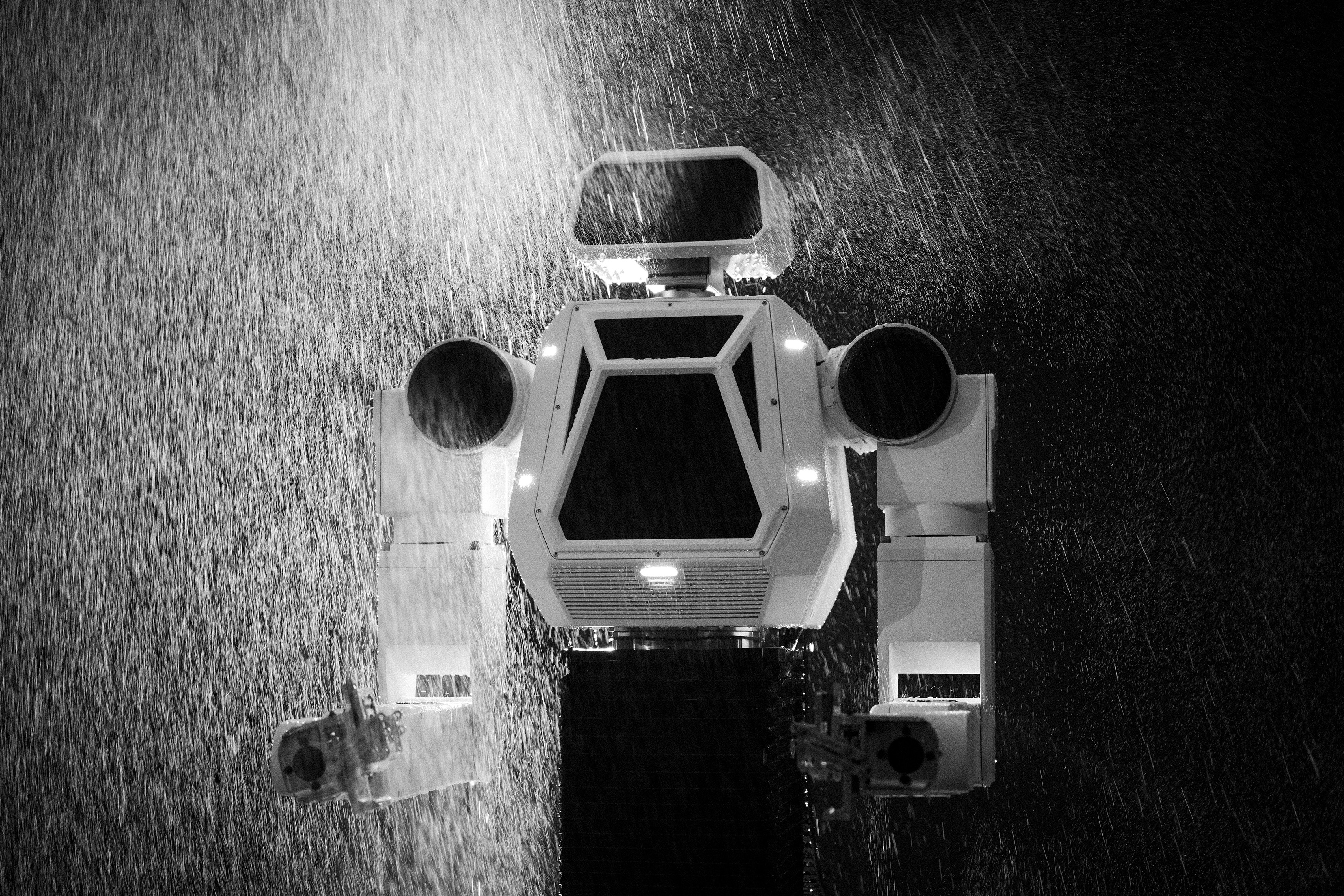
The robot needs the reach, strength, stability, precision, and reliability to carry out its decisions. We designed TITAN around these combined requirements, with configurable modular design for specific operations.
[EVIDENCE TO ADD: Selected hardware results showing how a design choice enabled the task.]
We are beginning to see these capabilities work together. Early RF-IFM field tests on TITAN have shown improvements in solar task execution, including speed, success rate, and handling of corner cases.
[EVIDENCE TO ADD: The strongest verified result and a representative task video.]
The next step is to establish how consistently those gains hold across more conditions, longer operation, and additional tasks.
Solar brings our choices into focus: strenuous work, essential infrastructure, and precise operations in changing conditions.
TITAN has completed a commercial pilot using our traditional and hybrid control stack. Separately, RF-IFM field testing is advancing learned execution.
The experience has taught us a crucial lesson:
Making the first job work and making the next hundred jobs repeatable are different engineering problems.
Preparation, calibration, exceptions, and recovery determine how effectively a system can be deployed again. Those lessons shape what we build next.
[VIDEO TO EMBED: Solar customer testimonial]
We began in solar. We are now developing applications in other industrial markets. Each will test which capabilities transfer and what still needs to be built.
In the months ahead, we will share more of our Industrial Foundation Model research, our next generation of robot platform, and the customer partnerships bringing RoboForce into new industries.
Our ambition is to make capable robotic labor available wherever difficult, essential work limits what people can accomplish.
The hardest work is where RoboForce began. There is far more ahead to build.


